
Nano Hydroxyapatite vs Fluoride: Which Is Better for Your Teeth?

Nano Hydroxyapatite vs Fluoride: Which Is Better for Your Teeth?

For decades, fluoride was the only serious answer to preventing cavities. Now a second ingredient — nano hydroxyapatite — appears on more and more toothpaste tubes. So which one should you choose? Here is how they compare.

What is nano hydroxyapatite?

Hydroxyapatite is the mineral your tooth enamel is already made of. In toothpaste it is broken into ultra-fine (nano) particles that can physically fill in the microscopic gaps where enamel has lost minerals — repairing and smoothing the surface rather than just coating it. In other words, it rebuilds the tooth with the same material nature used to build it.

What does fluoride do?

Fluoride works differently. It reacts chemically with the enamel surface to form a more acid-resistant mineral, making teeth harder to dissolve. It is one of the most extensively studied ingredients in all of dentistry and is highly effective at preventing decay.

Nano hydroxyapatite vs fluoride: the key differences

  • Mechanism: Fluoride chemically hardens enamel; nano hydroxyapatite physically rebuilds it.
  • Cavity prevention: Studies indicate hydroxyapatite can be as effective as fluoride at preventing cavities, through a different route.
  • Safety profile: Nano hydroxyapatite is biocompatible and non-toxic even if small amounts are swallowed, which makes it a popular choice for young children and during pregnancy. Fluoride is safe and effective but does need dosage control in young kids who haven't mastered spitting.
  • Extras: Hydroxyapatite also helps seal exposed dentin tubules, so it can reduce sensitivity and add a subtle brightening effect as the surface becomes smoother.

So which is better?

Neither is universally "better" — they solve the same problem from different directions. Fluoride has the longest track record. Nano hydroxyapatite is an excellent option if you want a fluoride-free formula, are choosing for a child or during pregnancy, or want enamel repair and sensitivity relief in one product.

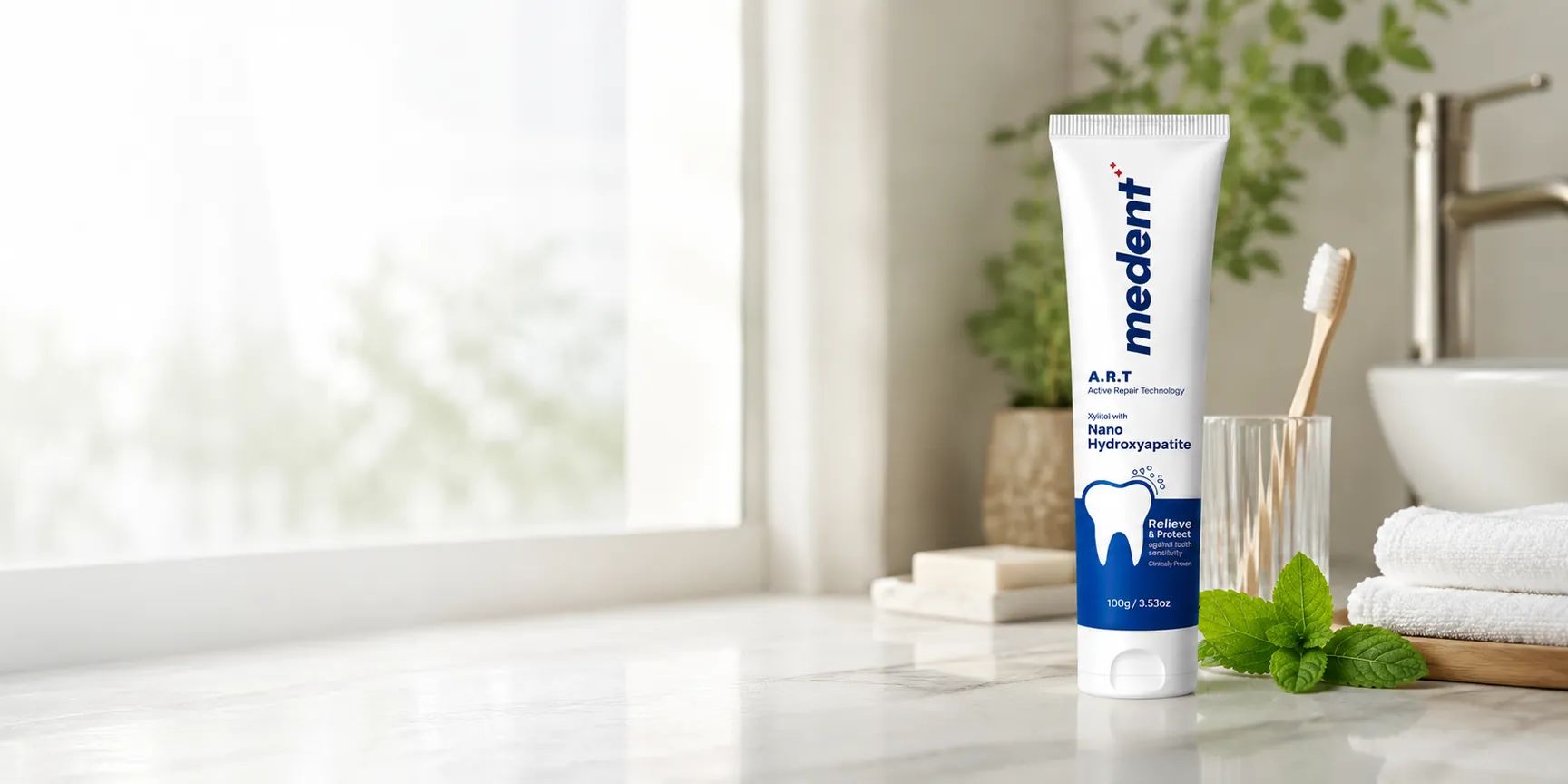
This is why nano hydroxyapatite is the common thread across much of the Medent range: Medent A.R.T. uses it fluoride-free with potassium nitrate for repair and sensitivity, Medent Charcoal pairs it with charcoal so whitening doesn't come at the cost of enamel, and Medent Natural adds it to a herbal formula for enamel support most herbal toothpastes lack.

Can you get both? Some people alternate — a fluoride toothpaste at one brushing and a hydroxyapatite formula at another. Whether that suits you is a personal, dentist-guided choice, not a requirement.

From the Medent range

Nano hydroxyapatite across the range

This article is for general educational purposes only and is not a substitute for professional dental advice. If you have persistent symptoms, please consult a dentist.

Questions & Answers

More about Medent A.R.T.

How does Nano Hydroxyapatite repair enamel?
It's the same mineral your enamel is already made of, broken into ultra-small particles that physically fill in microscopic gaps where minerals have been lost — repairing the surface rather than just coating it.
Is Nano Hydroxyapatite as effective as fluoride?
Studies show hydroxyapatite is as effective as fluoride at preventing cavities, though it works through a different mechanism — physical rebuilding rather than a chemical hardening reaction.
Why choose a fluoride-free formula at all?
Nano Hydroxyapatite is biocompatible and non-toxic, making it a preferred option for children, pregnant women, or anyone who wants to avoid fluoride without giving up remineralization.
How does Potassium Nitrate work alongside Nano Hydroxyapatite?
Potassium nitrate calms the nerve from the inside, reducing pain signals from hot/cold triggers, while Nano Hydroxyapatite works from the outside, sealing exposed tubules and rebuilding the enamel surface.
Is it safe to swallow small amounts of Nano Hydroxyapatite?
Yes — regulatory review has confirmed its safety at concentrations well above what's used in toothpaste, and it carries no known toxicity risk, unlike fluoride which needs dosage control in young children.
Why no SLS in this formula?
SLS (sodium lauryl sulfate) is a foaming agent some people find irritating to gums and soft tissue. Leaving it out keeps the formula gentler, which matters more when you're also treating sensitivity.
Why no artificial sweeteners?
Sweetened with xylitol instead — a natural sugar alcohol that doesn't feed decay-causing bacteria, unlike sugar-based sweeteners.
Why is it Triclosan-free?
Triclosan has fallen out of Favor industry-wide due to safety and environmental concerns; most major oral care brands have phased it out, and this formula never included it.
Does "no harsh abrasives" reduce cleaning power?
No — it's a deliberate lower-abrasively choice so the formula doesn't wear down enamel it's simultaneously trying to repair. General / Usage FAQs
Is A.R.T. a substitute for fluoride toothpaste, or should I alternate?
It's formulated to work as a standalone daily toothpaste. Some people do alternate — fluoride in the morning, A.R.T. at night — but that's a personal/dentist-guided choice, not a requirement.
How is A.R.T. different from Medent Charcoal?
Charcoal focuses on lifting surface stains for whitening; A.R.T. focuses on repairing and remineralizing the enamel itself plus sensitivity relief. Both use Nano Hydroxyapatite, but for different primary goals.
How is A.R.T. different from Medent Sensitive?
Sensitive uses fluoride + potassium nitrate for sensitivity and decay prevention. A.R.T. swaps fluoride for Nano Hydroxyapatite, adding enamel repair and a fluoride-free formula to the same sensitivity relief.
Is it safe during pregnancy?
Yes, nano-hydroxyapatite toothpaste is considered exceptionally safe during pregnancy. Because it is a biocompatible and non-toxic mineral identical to what naturally makes up your teeth and bones.
Does it foam less than regular toothpaste?
Yes, that's expected — SLS is what creates heavy foam in most toothpaste, and this formula is SLS-free.
If sensitivity doesn't improve after a month, what should I do?
See a dentist — persistent sensitivity after consistent 4+ week use can indicate an issue (cavity, crack, gum recession) that needs professional treatment.

Explore Medent A.R.T.