
Herbal Toothpaste: Does It Actually Work? A Science-Backed Look

Herbal Toothpaste: Does It Actually Work? A Science-Backed Look

Herbal toothpaste has been used across India for generations — but does traditional plant-based oral care actually hold up to scrutiny? Increasingly, the answer from research is: the well-known herbs earn their place. Here is what the evidence says.

How is herbal toothpaste different?

Instead of relying only on synthetic agents, herbal toothpaste uses plant extracts with antibacterial properties. For people who want to avoid ingredients like SLS and parabens, it offers a gentler route to the same daily goals — controlling plaque, protecting gums and freshening breath.

Do the herbs actually work?

Two ingredients stand out in the research on herbal oral care:

  • Neem is valued for its antibacterial and anti-inflammatory properties, and is associated with reduced plaque and healthier gums — a practice rooted in thousands of years of daily use.
  • Babool (acacia) has been studied in neem–babool formulations shown to improve gingivitis, plaque and bad breath compared with baseline use.

Other traditional additions each play a role: clove contains eugenol, a natural analgesic that can ease tooth discomfort; cinnamon and cardamom bring antibacterial action and fresher breath; and spearmint delivers a long-lasting cooling freshness.

The gap in most herbal toothpastes

Here is the honest limitation: most herbal toothpastes focus on gum care and freshness but offer little for enamel repair. Traditional herbs are not remineralising agents. That is the trade-off people usually accept when they choose herbal.

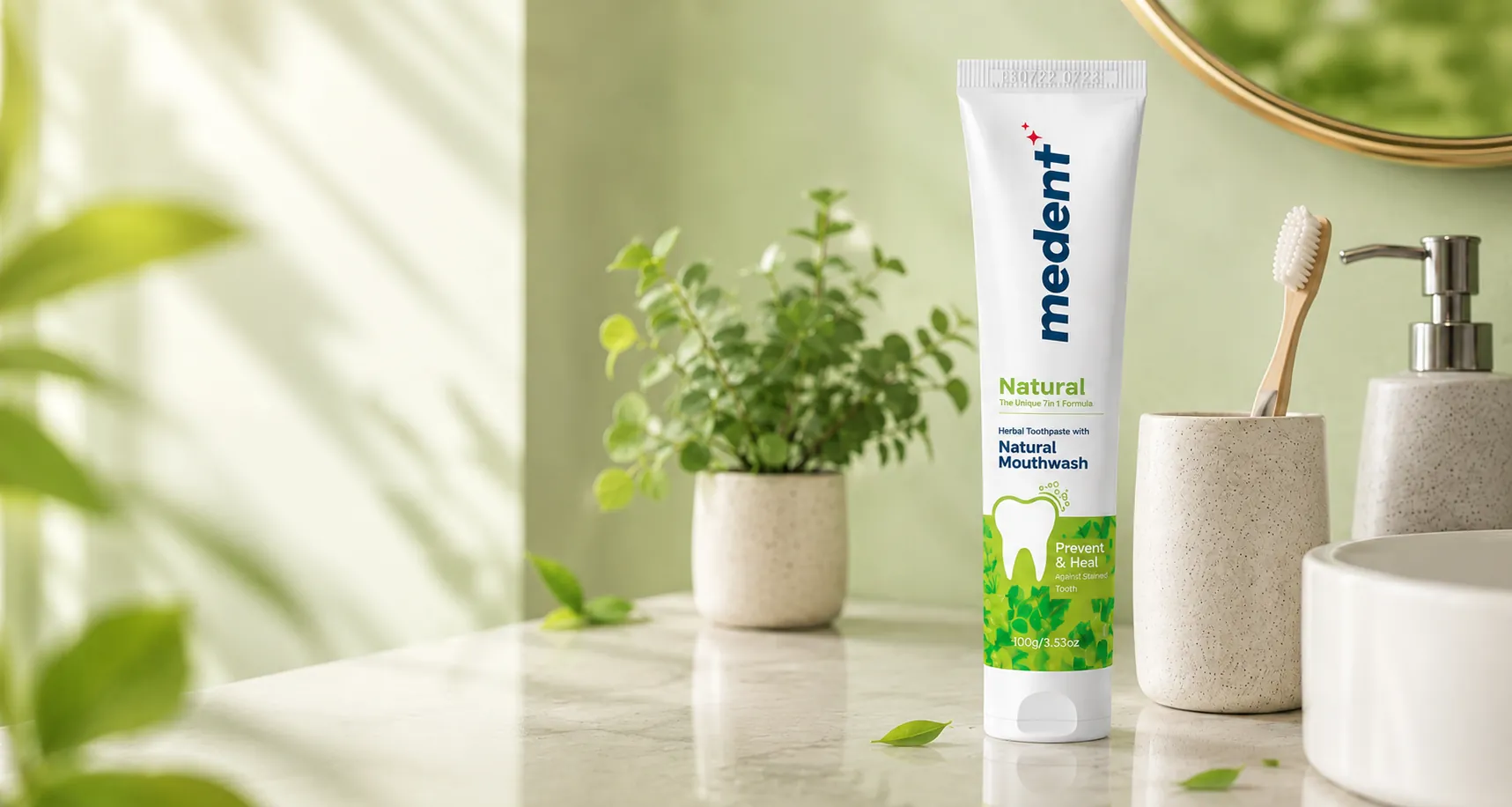
Medent Natural was built to close that gap — it combines a seven-herb Ayurvedic blend (neem, babool, cardamom, cinnamon, clove, tomar and spearmint) with nano hydroxyapatite, so you get traditional gum care and modern enamel support in one formula, rather than choosing one or the other.

Is herbal as effective as regular toothpaste at cleaning?

For plaque and bacteria control, well-studied herbs like neem and babool perform well. The main historical weakness — enamel care — is addressed when a herbal formula includes a remineralising active. And because a good herbal toothpaste leaves out SLS, it is often gentler on sensitive gums.

Who is it for? Herbal toothpaste suits anyone wanting to reduce synthetic additives without giving up gum care — ideally one that still supports enamel rather than herbs alone.

From the Medent range

Herbal care, with modern enamel science

This article is for general educational purposes only and is not a substitute for professional dental advice. If you have persistent symptoms, please consult a dentist.

Questions & Answers

More about Medent Natural

What makes herbal toothpaste different from regular toothpaste?
Herbal toothpaste uses plant extracts with antibacterial properties instead of synthetic chemicals, offering a gentler alternative for people who want to avoid ingredients like SLS and parabens.
What makes Medent Natural different from other herbal toothpastes?
Medent Natural combines seven traditional Ayurvedic herbs with Nano Hydroxyapatite — so you get centuries-old herbal wisdom plus modern enamel science in one formula, not one or the other.
Does neem actually help with gum health?
Yes — neem is used for its antibacterial and anti-inflammatory properties to promote healthier teeth and gums, reducing plaque and associated bacteria, a practice rooted in thousands of years of daily use across India.
What does Babool do for oral health?
Clinical evaluation has shown Babool-neem formulations improve gingivitis, plaque, and halitosis compared to baseline use, making it a well-studied traditional ingredient, not just folklore.
Why clove in a toothpaste?
Clove oil contains eugenol, a natural analgesic that can help ease tooth discomfort, alongside its antimicrobial and freshening properties.
Does Medent Natural still repair enamel like your other products?
Yes — Nano Hydroxyapatite is in this formula too, working to remineralize and smooth enamel exactly as it does in Medent A.R.T. and Charcoal, so herbal care doesn't mean giving up enamel support.
What are the seven herbs in Medent Natural?
Neem, Babool, Cardamom, Cinnamon, Clove, Tomar, and Spearmint — a full Ayurvedic blend alongside Nano Hydroxyapatite for enamel care.
What does cinnamon do in an herbal toothpaste?
Cinnamon brings natural antibacterial properties and a warm, pleasant Flavors, complementing mint and clove for all-day freshness.
What does cardamom add to the formula?
Cardamom offers a refreshing Flavors while helping freshen breath and reduce oral bacteria.
Why spearmint instead of regular mint Flavors?
Spearmint delivers a naturally cooling, long-lasting freshness — it's prized for revitalizing the mouth and works alongside other herbal ingredients to help clear Odor-causing bacteria.
Does Medent Natural contain SLS, parabens, or Triclosan?
No — Medent Natural is completely free of SLS, parabens, and Triclosan, staying true to a clean, herbal-first formula.
Is Medent Natural tested on animals?
No — Medent Natural is not tested on animals, in line with the entire Medent range.
How is Medent Natural different from Medent Charcoal?
Charcoal is built around whitening surface stains; Natural is built around herbal gum care and holistic daily protection. Both include Nano Hydroxyapatite for enamel support.
Is herbal toothpaste as effective as regular toothpaste at cleaning?
Yes — herbal ingredients like neem and Babool are well-studied for reducing plaque and bacteria, and Medent Natural adds Nano Hydroxyapatite on top for enamel care most herbal toothpastes don't offer.

Explore Medent Natural