
Charcoal toothpaste is everywhere, promising a brighter smile from a jet-black paste. But is it actually safe to use — and does it work? Here is a science-first look at what activated charcoal does, where the concerns come from, and how to use it sensibly.
How does charcoal whiten teeth?
Activated charcoal is highly porous and mildly abrasive. It works by lifting surface stains — the discolouration from coffee, tea, wine and everyday habits — through gentle mechanical action. It is important to be clear about what that means: charcoal removes extrinsic (surface) stains. It does not bleach teeth or change their natural underlying shade the way peroxide whitening does.
Is charcoal toothpaste safe?
The honest answer: it depends entirely on the formulation. The concern most often raised by dentists is abrasivity. A charcoal paste that is too abrasive, used aggressively every day, can wear down enamel over time — and enamel does not grow back. So the ingredient itself is not the problem; concentration, particle size and the rest of the formula are what matter.
A few things separate a well-made charcoal toothpaste from a harsh one:
- Gentler concentration designed for daily use rather than maximum scrubbing power.
- Enamel support built in — for example, nano hydroxyapatite to remineralise and smooth the surface while the charcoal lifts stains.
- A clean base free from SLS and triclosan.
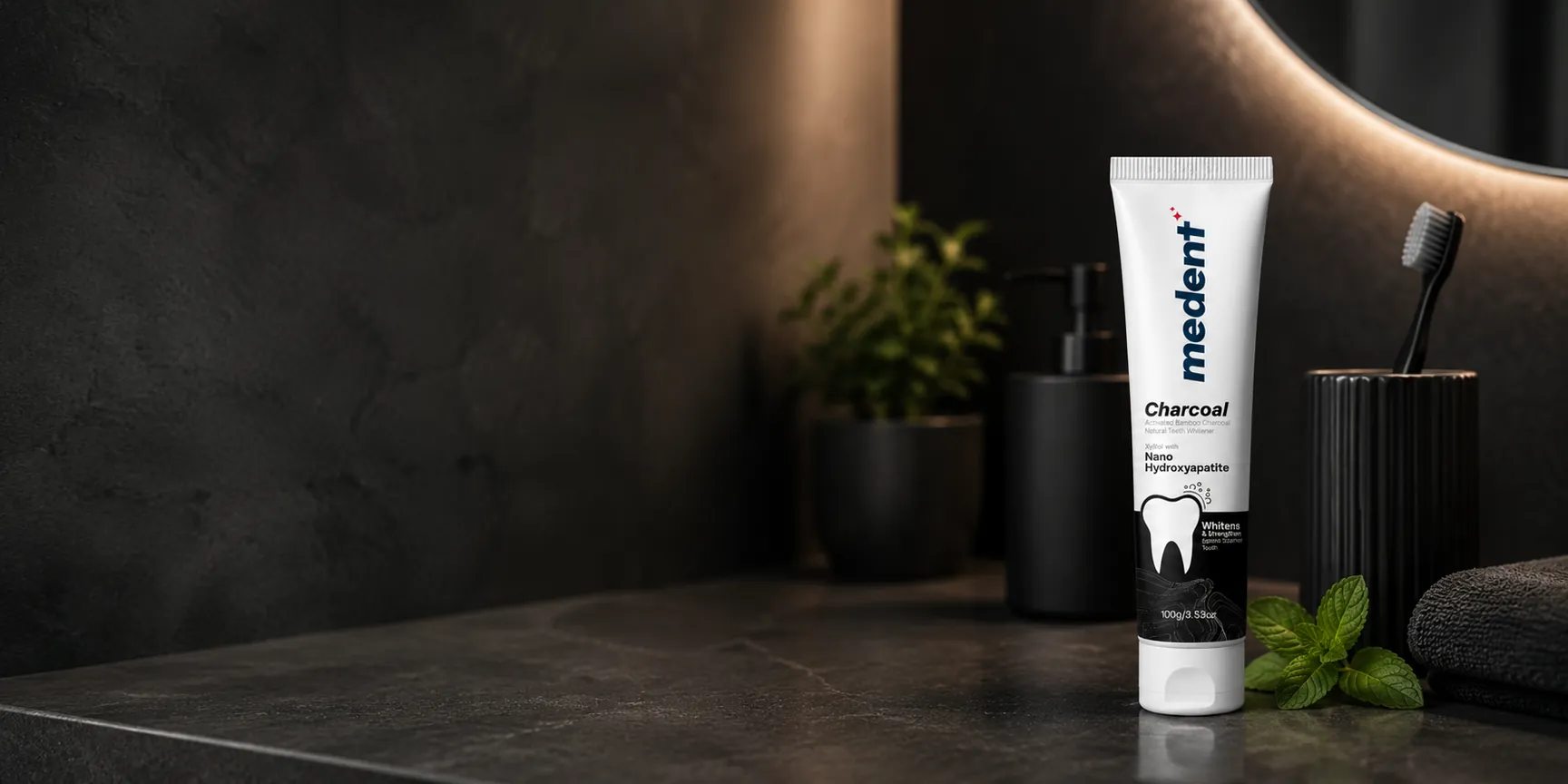
Medent Charcoal pairs activated bamboo charcoal with nano hydroxyapatite specifically so that stain removal and enamel care happen together, at a concentration formulated for everyday use.
Common charcoal toothpaste questions
Will it stain my toothbrush or sink?
A well-formulated charcoal paste should rinse away completely clean. Medent Charcoal is designed to rinse without staining your brush, sink or mouth.
Can I use it if I have veneers or crowns?
Yes — brush and rinse as usual. Charcoal lifts surface stains from natural enamel; it won't change the shade of restorations. If you have specific concerns about dental work, check with your dentist.
How often should I use it?
With a gentle, daily-formulated paste you can use it twice a day. If you are ever unsure about a product's abrasivity, alternate it with a low-abrasive toothpaste and watch how your teeth feel.
The takeaway: charcoal toothpaste is safe when the formula is gentle and enamel-supportive. Look for one that combines charcoal with a remineralising active rather than relying on abrasion alone.
This article is for general educational purposes only and is not a substitute for professional dental advice. If you have persistent symptoms, please consult a dentist.